Copper and aluminum foil bright annealing furnace
Precision foil annealing route for copper foil, aluminum foil, and other ultra-thin metal foil materials that need stable heating, cooling, and web tension.
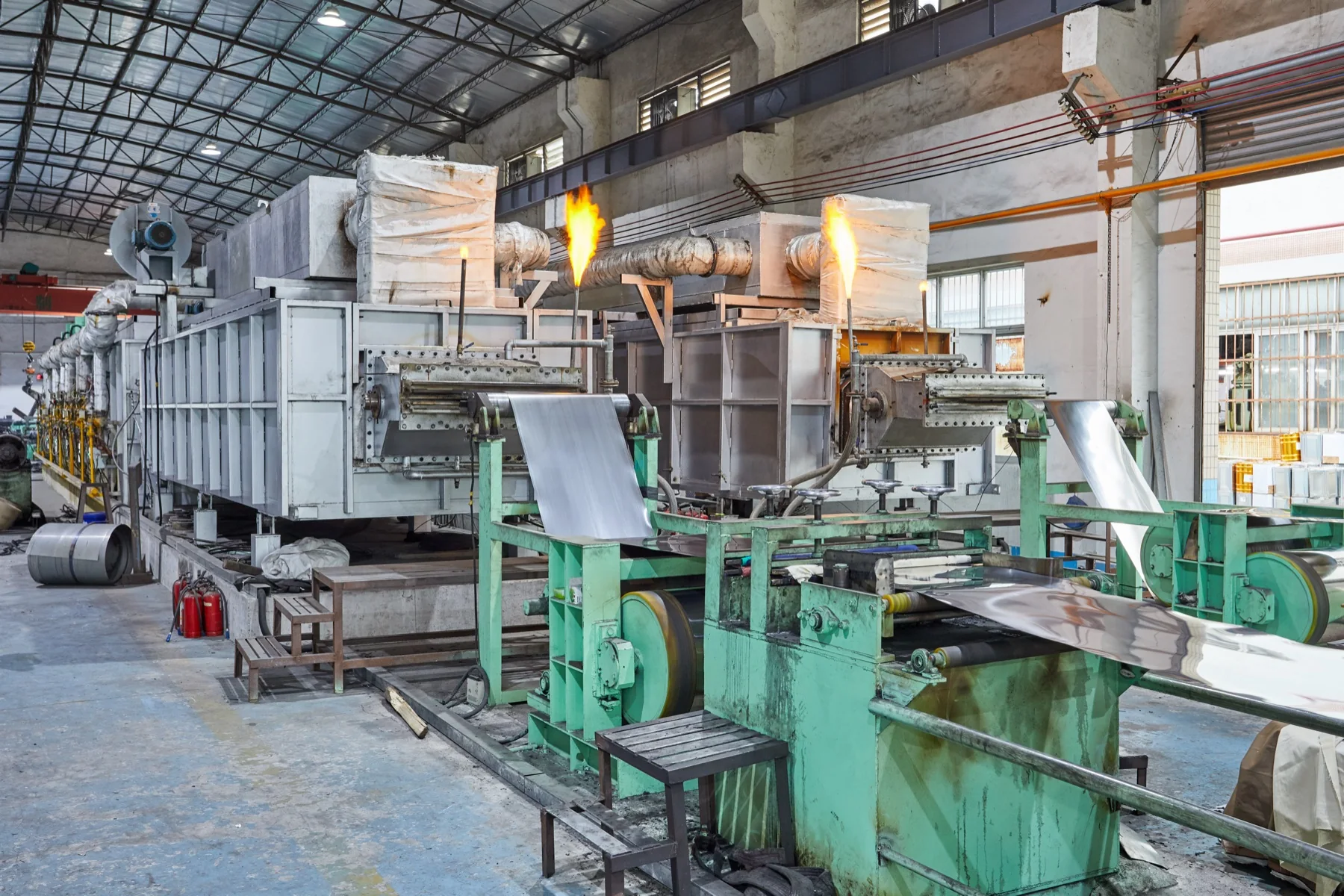
Controlled annealing for non-ferrous foil.
| Foil materials | Copper foil, aluminum foil, and project-specific ultra-thin metal foil |
|---|---|
| Process type | Precision foil annealing and ultra-thin material annealing |
| Surface target | Clean bright foil surface and controlled oxidation risk |
| Control focus | Thermal curve, protective atmosphere, cooling rate, and web tension |
| Line concept | Continuous foil annealing furnace for non-ferrous metal foil |
Precise heating for sensitive foil materials.
- Copper foil and aluminum foil need controlled heating to protect surface and material properties.
- Automatic temperature control, records, alarms, and energy monitoring support repeatable precision foil annealing.
- AKS cooling and atmosphere philosophy can be tuned around non-ferrous foil surface requirements.
Foil process design depends on material sensitivity.
For copper foil and aluminum foil producers, the best furnace route is not decided by furnace temperature alone. AKS reviews foil thickness, width, alloy, surface target, tension window, and required uptime before recommending the annealing line design.
Copper and aluminum foil are sensitive to surface oxidation, cooling rate, and web tension changes, so the annealing furnace must balance heat transfer with stable foil travel. AKS configures protective atmosphere, drive coordination, cooling modules, and control records to support repeatable precision foil annealing for non-ferrous foil production.
- Copper foil route: protect conductivity-related material targets while controlling oxidation.
- Aluminum foil route: balance ductility recovery, surface cleanliness, and web stability.
- Both routes depend on protective atmosphere, cooling configuration, and high-precision tension control.
